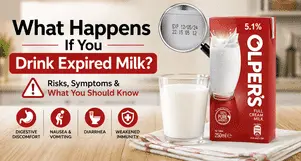
It's happened to almost everyone: you pour a glass, take a sip, and something's off a sour taste, a strange smell, maybe a clumpy texture. So what actually happens if you drink expired milk, and how worried should you really be?
Here's a clear breakdown of the science behind milk spoilage, what to expect if you drink spoiled milk, and how to protect your family through better milk freshness habits including how a quality-tested brand like Olper's reduces this risk in the first place.
What Actually Causes Milk to Spoil
Milk spoilage happens when bacteria in the milk multiply and feed on its natural sugar, lactose and protein. As a byproduct these bacteria produce lactic acid, which lowers the milk's pH, causes it to curdle, and creates that unmistakable sour smell and taste. This process speeds up dramatically when milk is left unrefrigerated or exposed to temperature swings which is exactly why proper storage matters as much as the printed date on the pack.
Important distinction: milk expiry dates best-before dates are largely about quality, not a hard safety cutoff. Properly refrigerated milk can often stay safe for a few days past that date, while milk left out too long can spoil well before it.
Is Drinking Spoiled Milk Actually Dangerous?
This is where a lot of people overreact. Food safety experts note there's an important difference between milk that has simply spoiled and milk that's contaminated with dangerous, disease-causing bacteria; these aren't always the same bacteria. In most cases, drinking a small amount of sour milk is unpleasant rather than truly dangerous.
That said, spoilage bacteria can sometimes coexist with harmful pathogens like E. coli, salmonella, or listeria particularly in milk that hasn't been properly pasteurized or has been mishandled after opening. That's the real risk zone, and it's part of why milk safety starts well before the "sniff test" with how the milk was processed and stored from the beginning.
Symptoms of Drinking Expired or Spoiled Milk
If you drink a meaningful amount of spoiled milk, common symptoms of milk-related food poisoning include:
- Nausea usually the first sign something's wrong
- Vomiting your body's way of clearing the irritant
- Diarrhea and stomach cramps as your digestive system reacts
- Mild fever, chills, or fatigue in some cases
For most healthy adults, these symptoms are uncomfortable but tend to resolve within 12–24 hours on their own. Higher-risk groups young children, pregnant women, the elderly, and people with weakened immune systems are more likely to experience stronger reactions and should be monitored more closely.
When to seek medical help: if symptoms include high fever, bloody stools, signs of dehydration, severe or persistent vomiting, or diarrhea lasting more than a day or two, it's time to see a doctor rather than wait it out.
What to Do If You Accidentally Drink Expired Milk
If it happens, here's the practical response:
- Don't panic, a small sip of slightly off milk is rarely a serious issue for most healthy adults.
- Rinse your mouth and drink some water.
- Stay hydrated sip water, oral rehydration solution, or clear fluids if symptoms develop.
- Eat bland foods (toast, rice, bananas) once you can tolerate food again.
- Avoid anti-diarrheal medication unless advised by a doctor your body is trying to clear the irritant.
- Watch for warning signs listed above and seek medical attention if they appear.
How to Tell If Milk Has Actually Gone Bad
Don't rely on the printed date alone use your senses:
- Smell a sour, unpleasant odor is the clearest sign
- Taste a slightly sour or "off" taste before you swallow a full sip
- Texture clumping, curdling, or a thick, slimy consistency
- Appearance yellowish tint or visible separation
If any of these show up, it's not worth the risk to discard the milk rather than trying to "cook it out" or use it anyway.
How Milk Type Affects Freshness and Expiry
Not all milk behaves the same way once opened, which matters when thinking about milk expiry realistically:
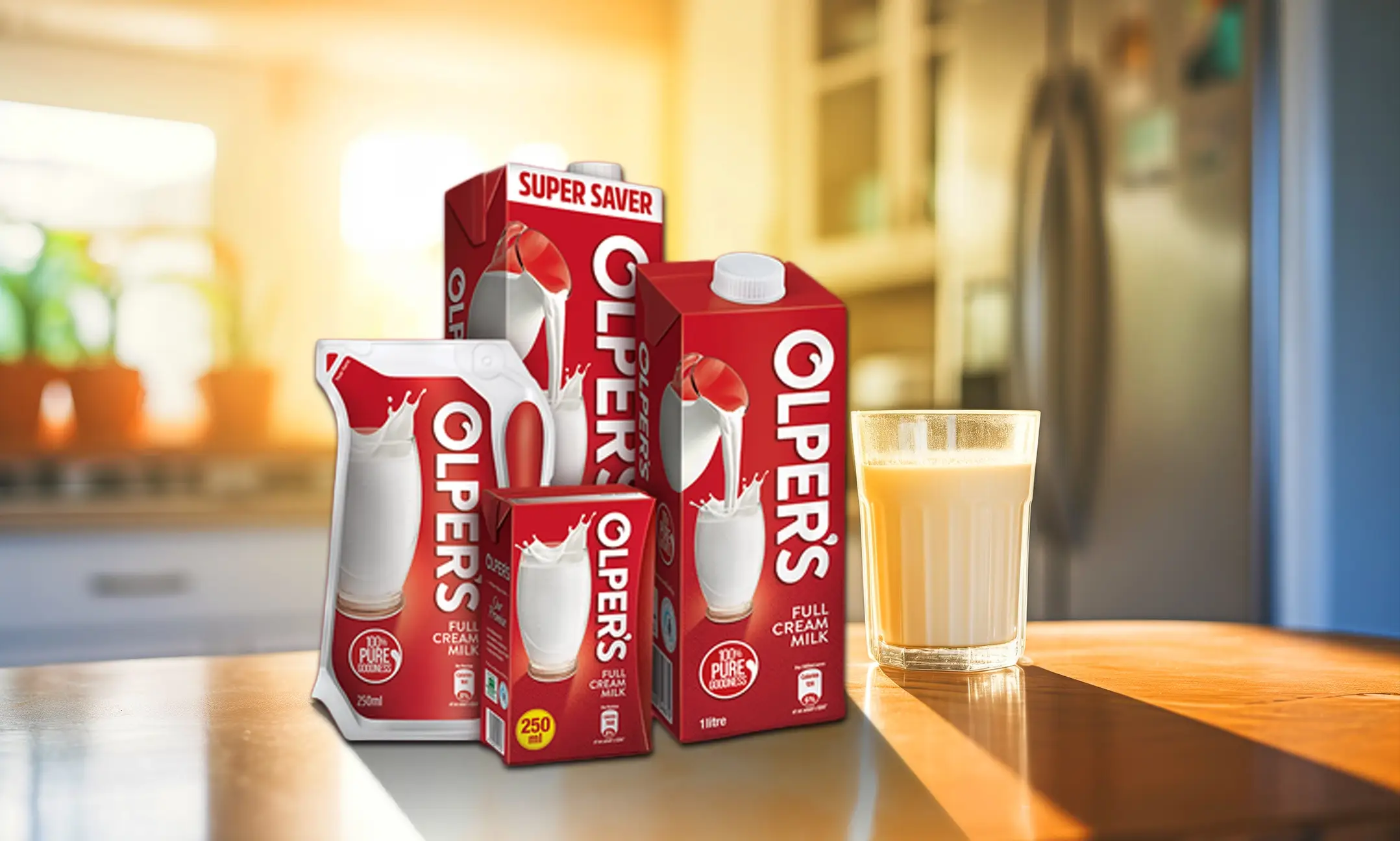
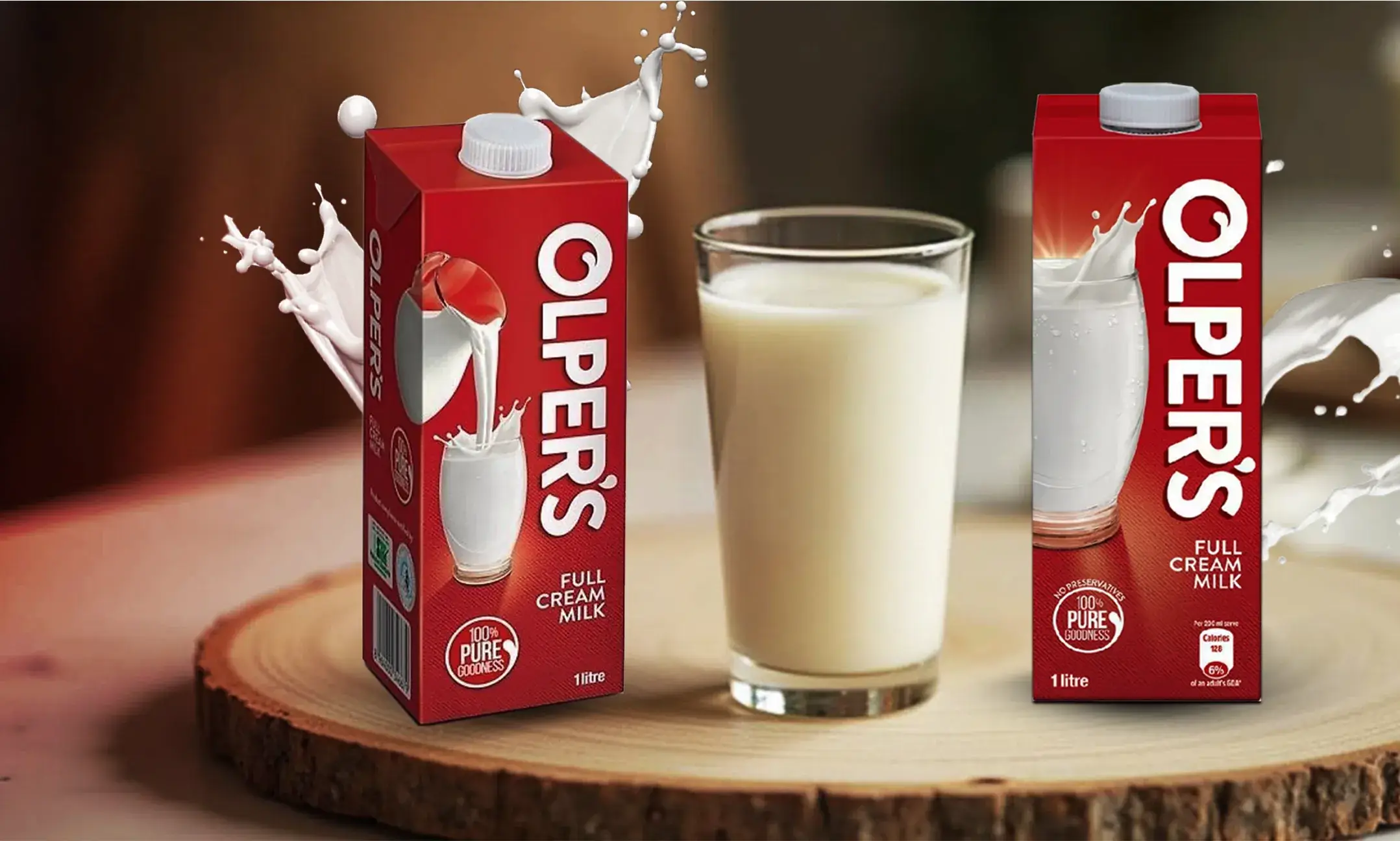
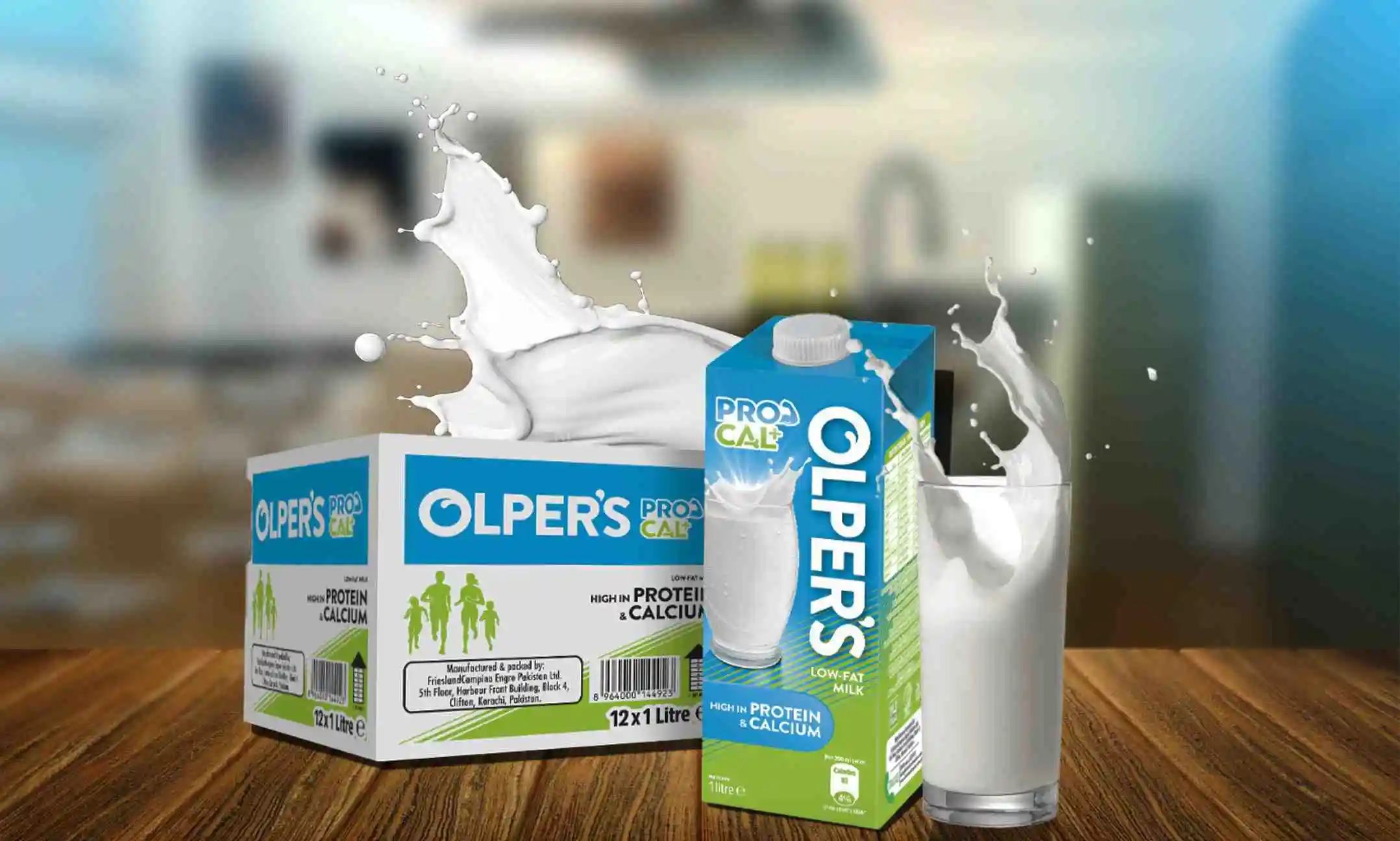
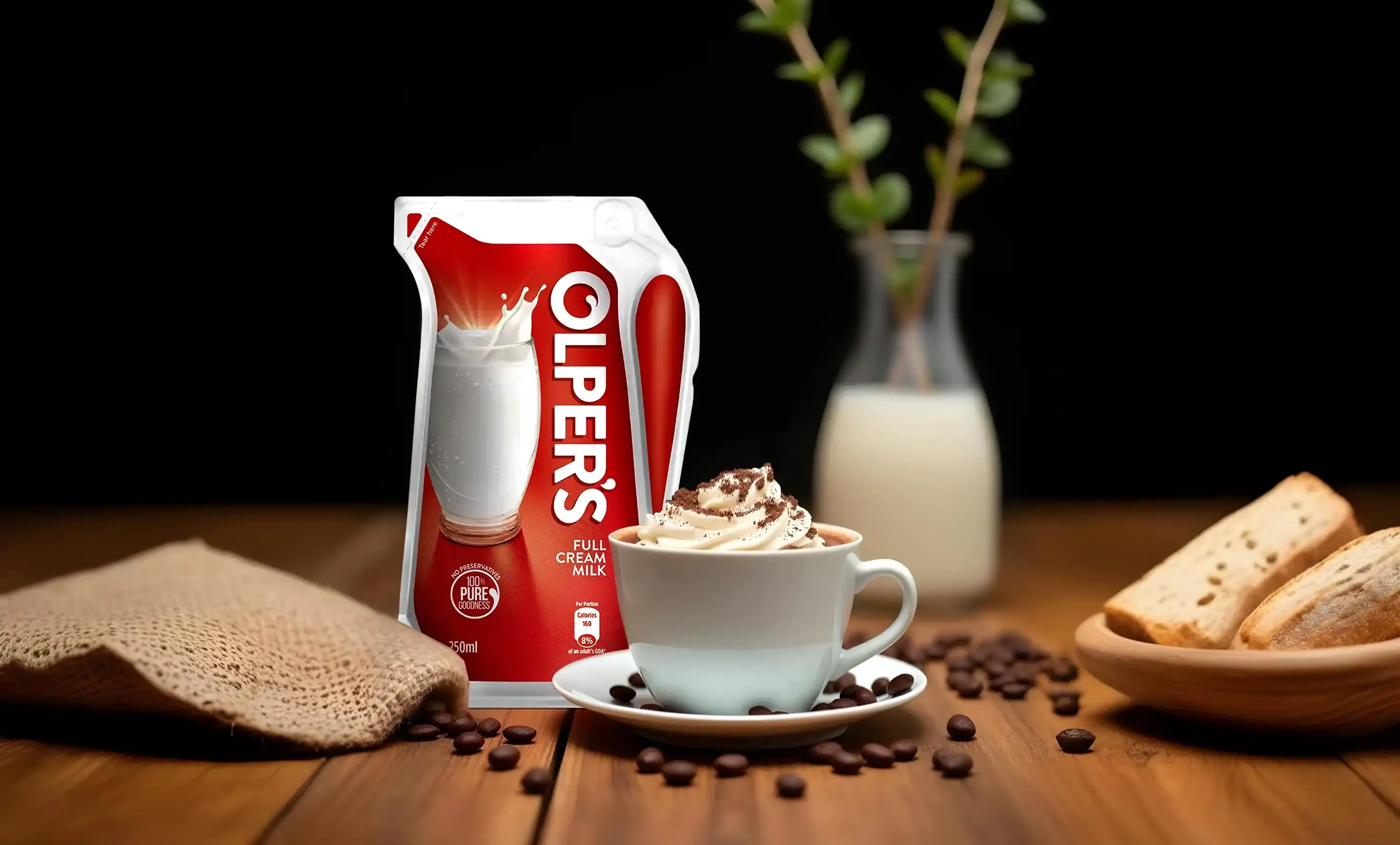
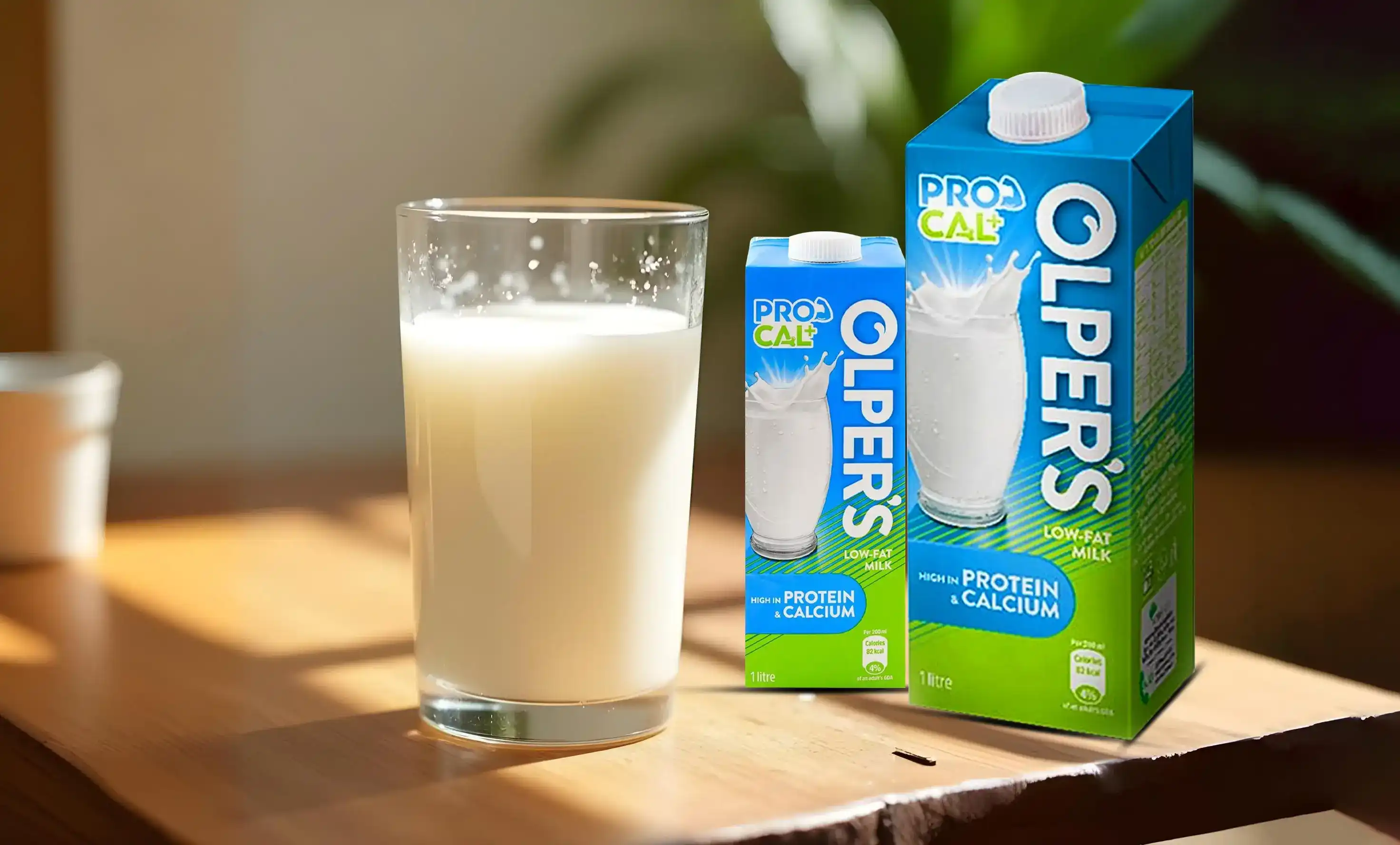
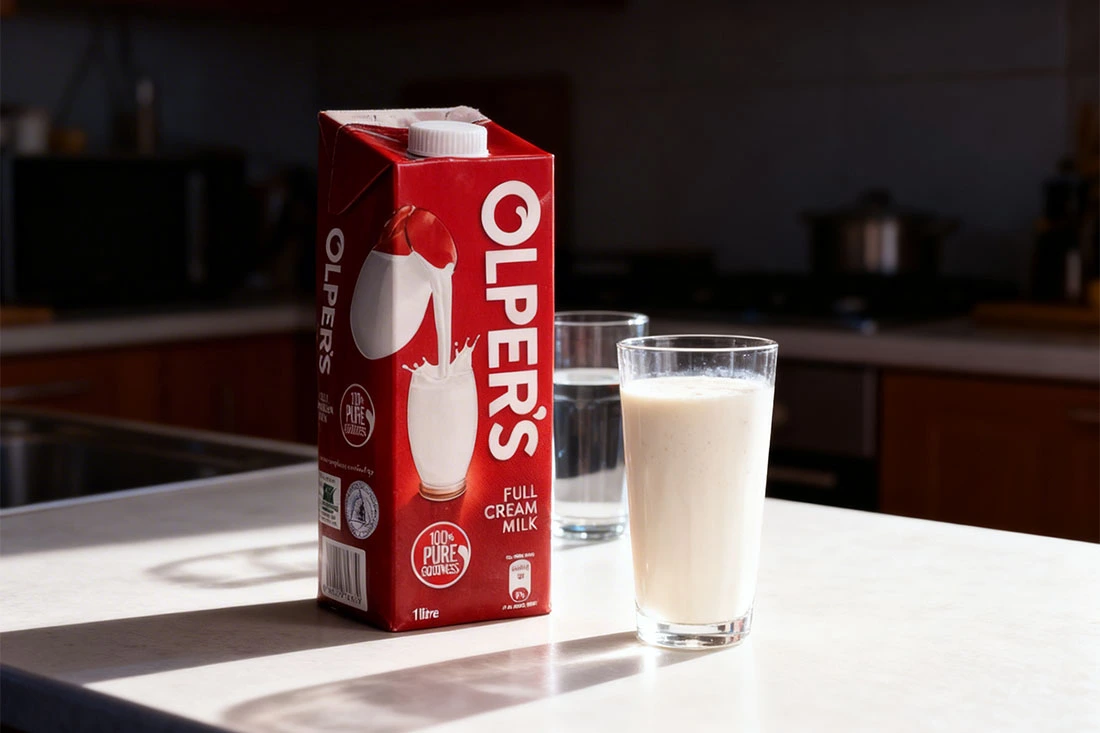
UHT milk (like Olper's): Sterilized at high heat, sealed, and shelf-stable for months unopened without refrigeration. Once opened, however, it should be refrigerated and used within the timeframe printed on the pack, typically a few days just like any fresh milk.
Pasteurized milk: Shorter shelf life from the start, needs continuous refrigeration, and spoils faster once opened or if the cold chain is broken.
Loose/unpackaged milk: Highest spoilage and contamination risk, since there's no sealed barrier and no way to verify handling temperature throughout the supply chain, a documented issue in Pakistan given how much milk moves through informal channels.
This is one of the practical advantages of a UHT brand like Olper's; the long unopened shelf life means less pressure to use milk quickly before it turns, and less risk of it silently spoiling in the fridge before you notice.
Tips to Keep Milk Fresh Longer
- Store milk at or below 4°C (40°F), ideally toward the back of the fridge, not the door
- Reseal the pack tightly after each use
- Avoid leaving milk out for more than 1–2 hours, especially in warm weather
- Don't return unused poured milk back into the original container
- Check for a valid manufacturing and expiry date at the time of purchase a habit worth building with any dairy product, including Olper's
Frequently Asked Questions
Q:Can you get food poisoning from expired milk?
Yes, though it's more likely from milk that's been mishandled or contaminated with harmful bacteria than from mild spoilage alone. Symptoms typically include nausea, vomiting, diarrhea, and stomach cramps usually resolving within 12–24 hours.
Q:Is it safe to drink milk a few days after the expiry date?
Milk expiry dates are mostly about quality, not an exact safety cutoff. Properly refrigerated milk can sometimes be fine for a few days past the date, but always check smell, taste, and texture before drinking rather than relying on the date alone.
Q: Does boiling spoiled milk make it safe to drink?
No. Boiling may kill some bacteria but won't remove the toxins or acids already produced during spoilage, and it won't restore the milk's quality. If milk shows signs of spoilage, it should be discarded rather than boiled and reused.
Q:How long does Olper's UHT milk stay fresh?
Once opened, UHT milk should be refrigerated and consumed within the timeframe stated on the pack, generally a few days similar to any fresh milk, even though the sealed, unopened pack has a much longer shelf life.
The Bottom Line
Drinking expired milk is unpleasant more often than it's genuinely dangerous but the risk rises with contaminated or mishandled milk, which is exactly why milk safety starts with proper processing and sealed packaging, not just checking the date. Choosing a quality-tested, sealed UHT brand like Olper's, storing it correctly, and trusting your senses over the printed date are the simplest ways to avoid the problem altogether.