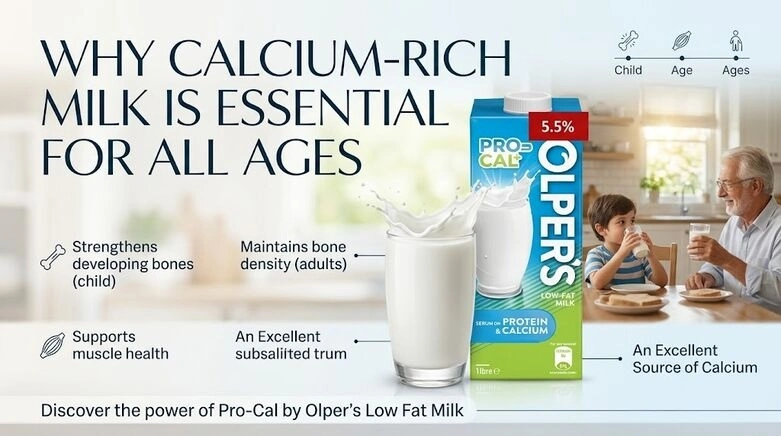
Calcium is one of those nutrients we hear about constantly, yet rarely stop to think about how our needs for it actually change as we age. From a toddler's first sippy cup to a grandparent's evening glass, milk for all ages plays a different but equally important role at every life stage. It's not just a "kids' drink" , calcium-rich milk supports the body from infancy through old age, adapting to whatever your bones, muscles, and organs need most at the time.
Here's a closer look at why calcium in milk matters so much, and how its benefits shift as you move through life.
Why Calcium Matters at Every Age
Calcium is best known for building strong bones and teeth, but its role in the body goes far beyond the skeleton. It's essential for muscle contraction, nerve signaling, blood clotting, and even regulating heartbeat. Roughly 99% of the body's calcium is stored in bones and teeth, acting as a structural reserve, while the remaining 1% circulates in the blood and tissues, powering everyday bodily functions.
Because the body doesn't produce calcium on its own, it must come from diet. Milk nutrition makes this simple: a single glass delivers a concentrated, easily absorbed dose of calcium, often alongside vitamin D and phosphorus which help the body actually use that calcium effectively rather than just consuming it.
Calcium-Rich Milk for Kids: Building the Foundation
Childhood and adolescence are when the body builds the majority of its lifetime bone mass. In fact, most bone density is established by the late teens to early twenties, which makes this window critical for long-term skeletal health. Milk for kids supports this rapid growth phase by supplying calcium alongside protein, both needed to build strong bones, support height growth and maintain healthy teeth development.
Beyond bones, calcium also supports proper muscle development and nerve function during childhood, both essential as kids become more physically active. Establishing a habit of daily milk consumption early in life often carries forward into adulthood, making it easier to maintain healthy calcium intake long-term.
Calcium-Rich Milk for Teenagers: The Critical Growth Window
Adolescence brings rapid growth spurts, and with them, an increased demand for calcium to keep pace with bone lengthening and density building. This is often the life stage where calcium needs peak, yet ironically, it's also when many teens start drinking less milk in favor of sugary drinks or caffeinated beverages.
Ensuring teenagers get enough calcium-rich milk during this window helps set the stage for peak bone mass, essentially the highest bone density a person will ever achieve. A higher peak bone mass in youth provides a stronger buffer against bone density loss later in life.
Calcium-Rich Milk for Adults: Maintenance and Prevention
Once bone growth stops in early adulthood, the focus shifts from building bone mass to maintaining it. Adult bones are constantly being broken down and rebuilt in a natural process called remodeling, and adequate calcium intake ensures this process doesn't result in a net loss of bone density over time.
For adults, milk for all ages also supports muscle maintenance, cardiovascular function through potassium content, and general metabolic health. Many adults underestimate their calcium needs simply because bone-related symptoms don't appear until much later making consistent milk nutrition a quiet but important daily habit rather than something to address only after problems arise.
Calcium-Rich Milk for Older Adults: Protecting Against Bone Loss
As people age, particularly past their 50s, bone density naturally begins to decline. This is especially pronounced in postmenopausal women due to hormonal changes that accelerate bone loss, increasing the risk of osteoporosis and fractures. Older adults often also absorb calcium less efficiently, making dietary sources like healthy milk even more important to prioritize.
Calcium-rich milk, especially when fortified with vitamin D, helps slow this natural decline by continuing to supply the raw material bones needed for repair and maintenance. Combined with weight-bearing exercise, regular milk consumption is one of the simplest, most accessible ways older adults can support long-term mobility and reduce fracture risk.
How Much Calcium Do Different Age Groups Need?
Calcium requirements shift noticeably across life stages:
- Children (4–8 years): Growing bones require a steady, moderate calcium supply to support early skeletal development.
- Teenagers (9–18 years): This age group generally has the highest calcium needs of any life stage due to peak bone-building activity.
- Adults (19–50 years): Calcium needs stabilisation but remains important for maintaining existing bone density.
- Older adults (50+ years): Requirements often increase again to help counteract natural age-related bone loss, particularly for postmenopausal women.
Milk remains one of the most efficient ways to meet these needs across every stage, since it delivers calcium in a form the body absorbs well, especially when paired with vitamin D.
Choosing the Right Milk for Every Life Stage
Not every age group needs the same type of milk:
- Full-cream milk suits growing children who need extra calories alongside calcium for healthy development.
- Low-fat or skimmed milk works well for adults managing weight or cardiovascular health while still meeting calcium needs.
- Fortified milk with added vitamin D is particularly valuable for older adults, whose calcium absorption naturally declines with age.
Adjusting the type of milk consumed as you move through different life stages ensures you're getting the right balance of nutrients without unnecessary excess calories or fat.
The Bottom Line
Calcium-rich milk isn't a one-size-fits-all recommendation, it's a nutritional support system that adapts to what your body needs at every stage of life. From building strong bones in childhood to protecting against bone loss in later years, milk for all ages remains one of the simplest, most reliable ways to keep calcium intake consistent throughout a lifetime. Making it a daily habit, regardless of age, is a small step with a genuinely lasting impact on health.
Frequently Asked Questions
1. Why is calcium-rich milk important at every age?
Calcium supports bone density, muscle function, nerve signaling, and heart health throughout life, and since the body can't produce it on its own, milk provides an easily absorbed dietary source at every age.
2. How much milk should children drink for healthy bone development?
Children generally benefit from two to three servings of dairy daily, though exact amounts can vary by age, appetite, and overall diet, so it's best to consult a pediatrician for personalized guidance.
3. Why do teenagers need more calcium than other age groups?
Adolescence is when the body builds the majority of its peak bone mass, so calcium demand rises sharply during this growth window to support rapid bone lengthening and density building.
4. Does milk still matter once bone growth stops in adulthood?
Yes, adult bones continuously remodel themselves, breaking down and rebuilding tissue, so consistent calcium intake from milk helps maintain bone density even after growth has stopped.
5. Why do older adults need more calcium-rich milk?
Bone density naturally declines with age, and absorption efficiency decreases too, making calcium-rich milk, especially fortified with vitamin D, important for slowing bone loss and reducing fracture risk.
6. Is fortified milk better than regular milk for calcium absorption?
Fortified milk often contains added vitamin D, which significantly improves how well the body absorbs calcium, making it a particularly useful choice for older adults or those with limited sun exposure.
7. Can adults get enough calcium without drinking milk?
It's possible through other calcium sources like leafy greens or fortified foods, but milk remains one of the most efficient and easily absorbed sources, making it hard to fully replace nutritionally.
8. Is low-fat milk as calcium-rich as full-cream milk?
Yes, calcium content remains largely similar between low-fat and full-cream milk, since fat removal doesn't significantly reduce calcium levels, making low-fat milk a good option for those managing calorie intake.
9. What happens if you don't get enough calcium over time?
Chronic low calcium intake can lead to reduced bone density over time, increasing the risk of fractures and conditions like osteoporosis, particularly in older adults and postmenopausal women.
10. Is it too late to start drinking calcium-rich milk as an older adult?
No, while peak bone mass is set earlier in life, maintaining calcium intake at any age still helps slow further bone loss and supports overall muscle and nerve function.