Walk into any kitchen in Pakistan and you'll hear "dairy cream" and "milk cream" used almost interchangeably yet ask a baker, a home cook, and your grandmother, and you'll get three slightly different answers about what each one actually means. The confusion is fair: both come from the same source, milk fat, but the journey from cow to carton changes everything about how a cream looks, behaves, and performs in your recipes. Get it wrong, and your curry splits, your whipped cream refuses to peak, or your coffee just doesn't taste as rich as it should.
In this guide, we'll break down what dairy cream really is, how it differs from milk cream, where products like Olper
s cream fits into the picture, and how to pick the right type of cream for your recipe.
What Is Dairy Cream?
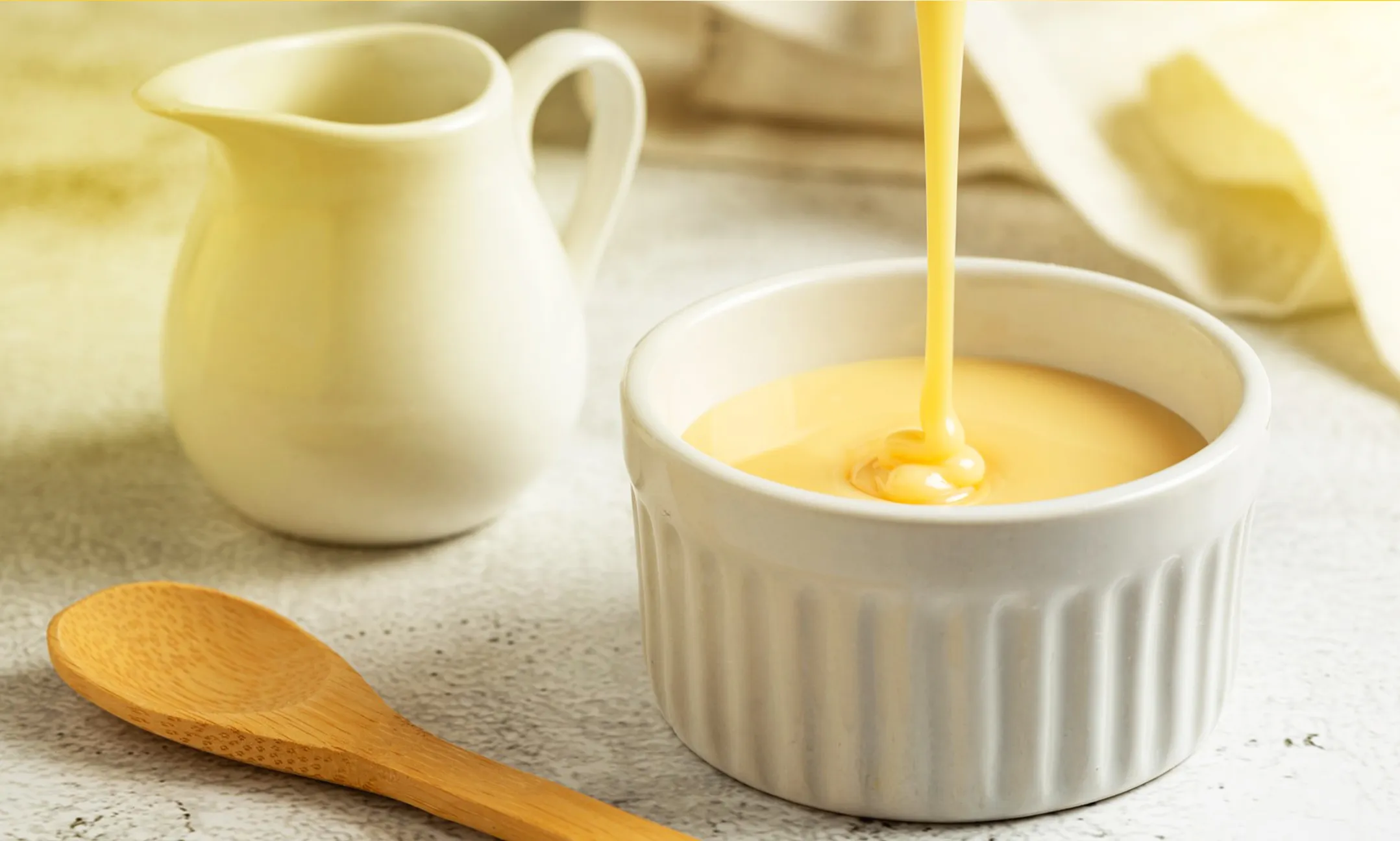
Dairy cream is the fat-rich layer that separates from milk when it's left to settle, or that's mechanically separated using a centrifuge in a dairy processing facility. It's essentially concentrated milk fat suspended in a small amount of liquid, giving it that thick, smooth, pourable or spoonable consistency we associate with rich desserts and creamy curries.
The fat content of dairy cream typically ranges anywhere from 18% to over 36%, depending on the type. This fat percentage is what determines whether a cream is light and pourable (like half-and-half) or thick enough to whip into stiff peaks (like heavy whipping cream). Commercially packaged dairy cream, such as Olpers cream, is standardized and pasteurized, which means it has a consistent fat content batch after batch, something you can't guarantee with cream skimmed at home.
Dairy cream is used across a huge range of applications: in coffee and tea, in soups and sauces, in baked goods, and as a finishing touch on desserts. It's also foundational to butter and cheese production, since churning cream is how butter is traditionally made.
What Is Milk Cream?
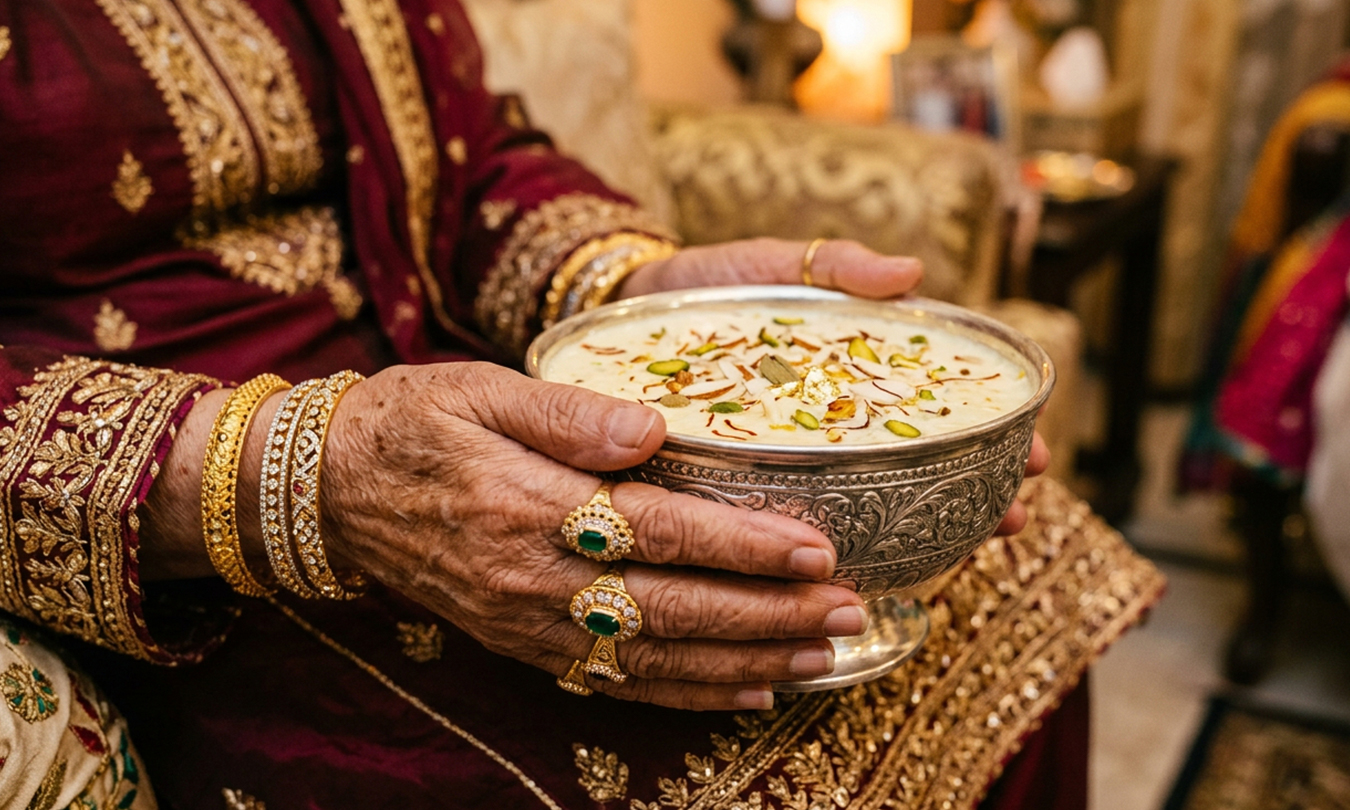
"Milk cream" is more of a colloquial term, often used in South Asian households and markets to describe the cream that naturally rises to the top of unhomogenized or lightly processed milk. In many Pakistani homes, this is the cream locally called "malai" that forms on top of boiled milk once it cools.
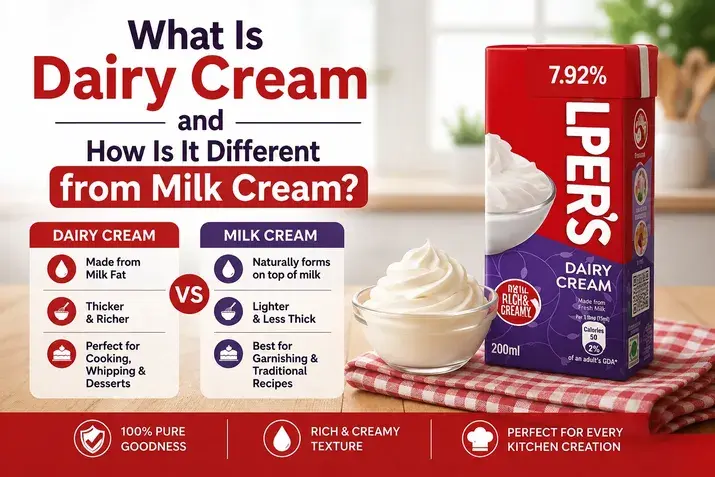
Technically speaking, milk cream and dairy cream come from the same source: milk fat. The difference lies in how they're processed and standardized:
- Milk cream (malai) is usually made at home or in small-batch settings. It forms naturally, has an inconsistent fat percentage depending on the milk source and season, and isn't pasteurized separately; it's simply the fat that rises to the surface.
- Dairy cream is commercially extracted, standardized to a specific fat percentage, pasteurized or UHT-treated for shelf stability, and packaged for consistent culinary use.
So while milk cream is a subset of what we broadly call dairy cream, packaged dairy cream products go through additional quality control that homemade malai simply doesn't.
Key Differences at a Glance
|
Aspect
|
Dairy Cream (Packaged)
|
Milk Cream (Malai)
|
|
Source
|
Commercially separated from milk
|
Naturally rises on boiled/settled milk
|
|
Fat content
|
Standardized (18%–36%+)
|
Variable, depends on milk source
|
|
Processing
|
Pasteurized/UHT treated
|
Minimal to no processing
|
|
Shelf life
|
Weeks to months (UHT packs)
|
Very short, usually used same day
|
|
Consistency
|
Uniform texture every time
|
Varies batch to batch
|
|
Best for
|
Baking, whipping, cooking, coffee
|
Traditional desserts, tea, home cooking
|
Where Olpers Cream Fits In
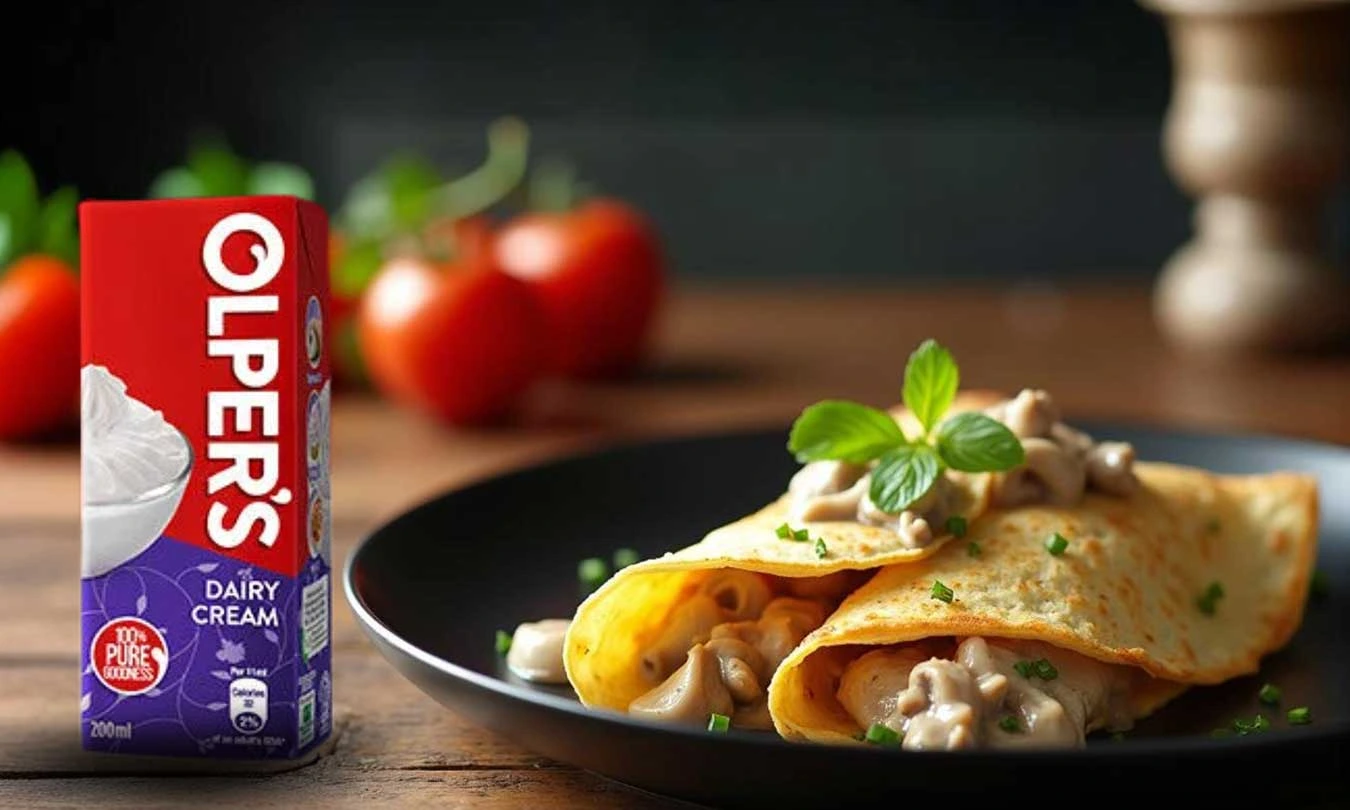
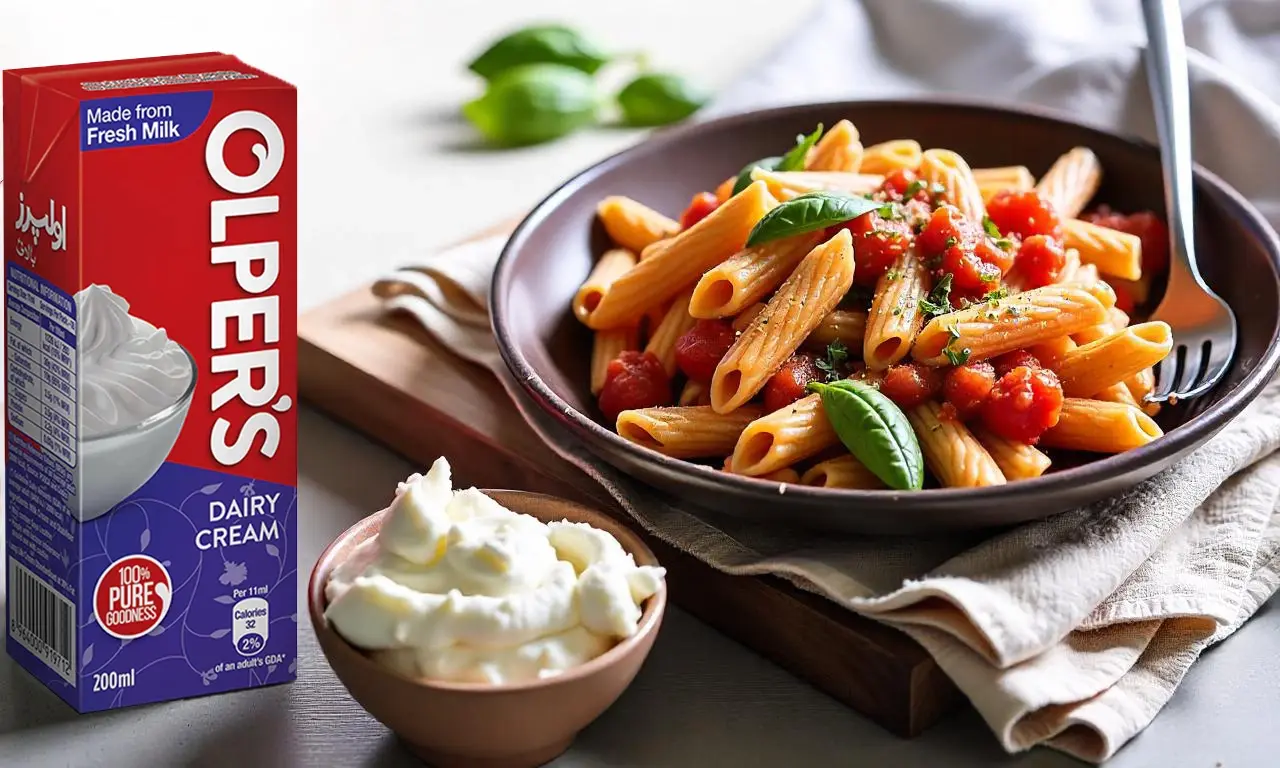
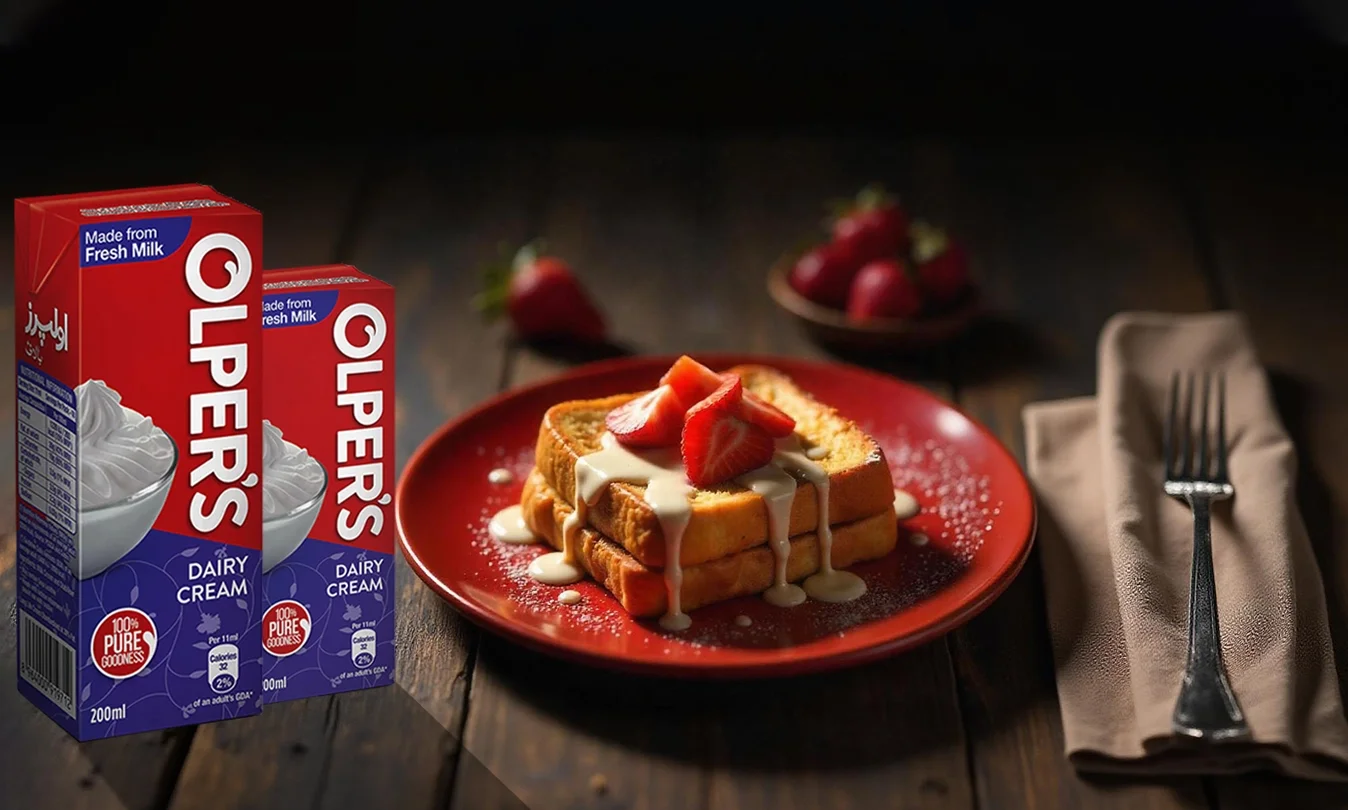
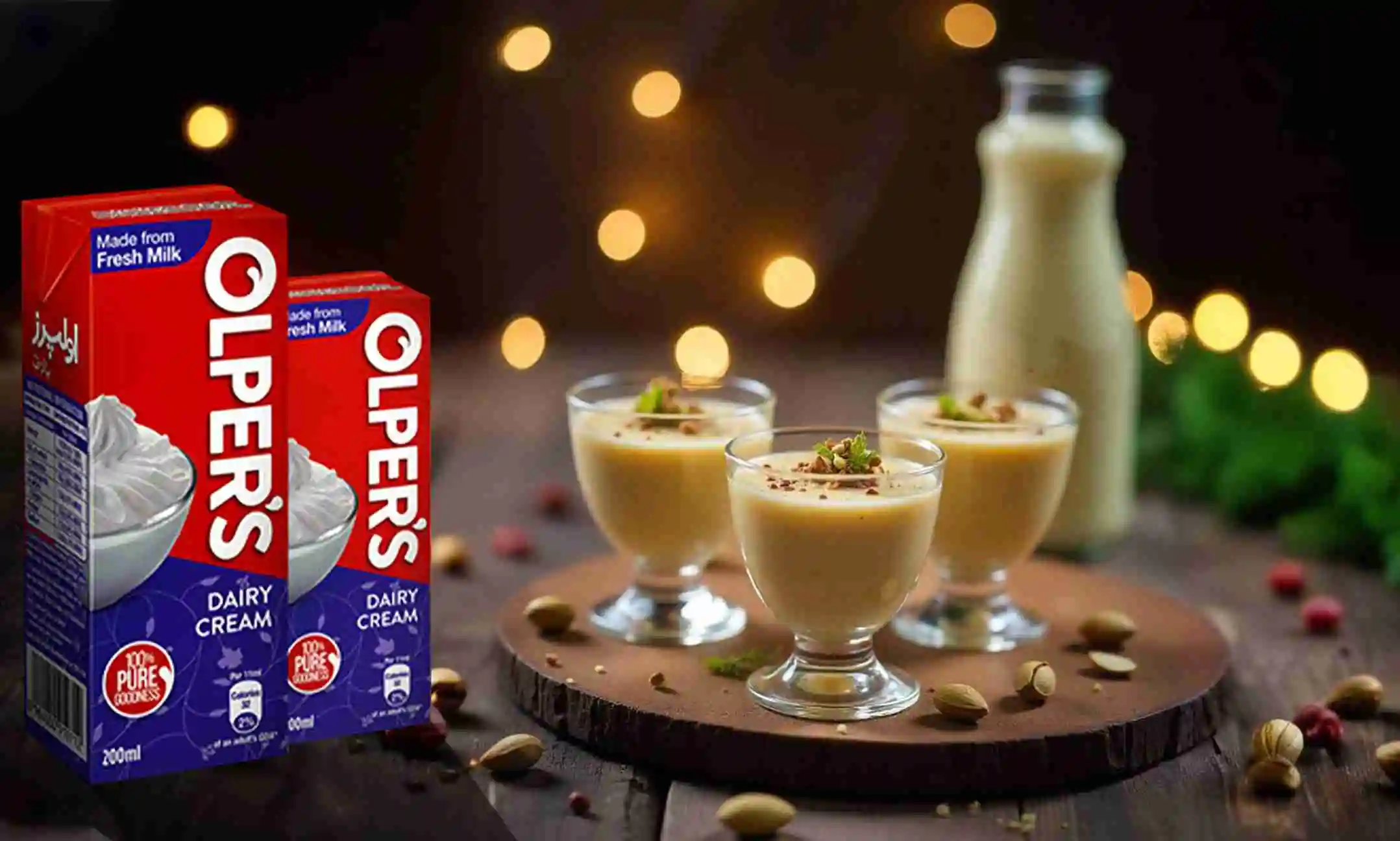
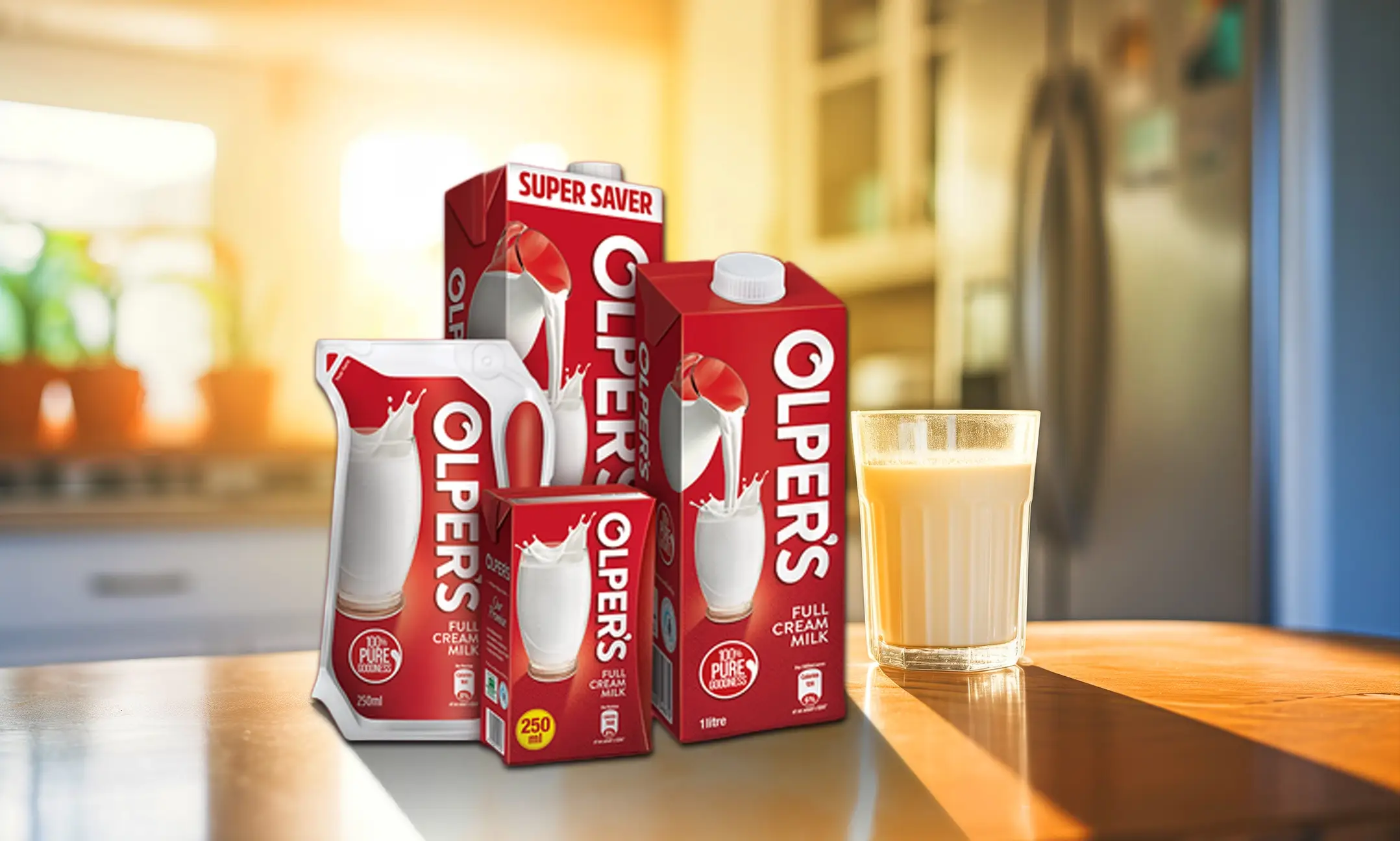
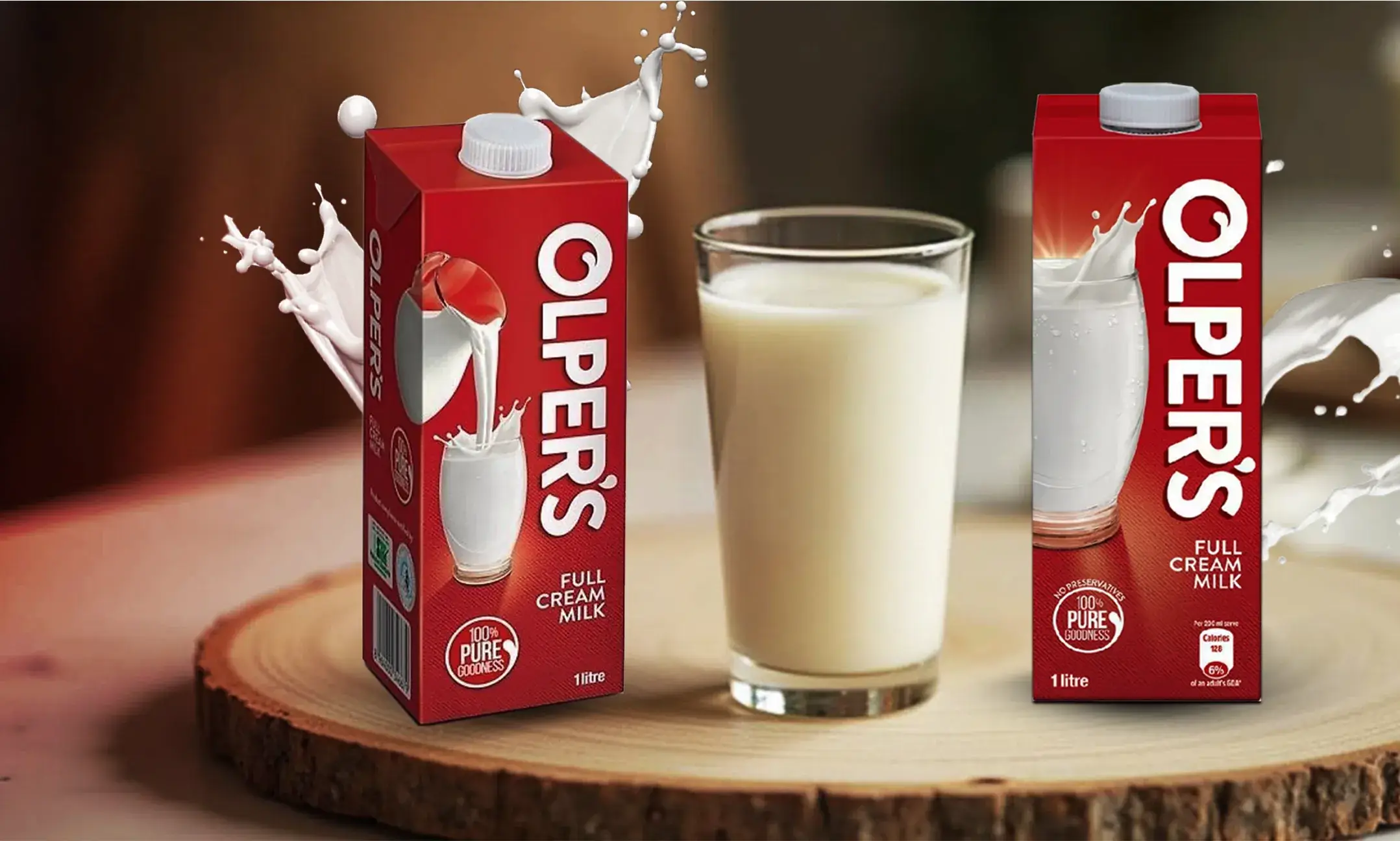
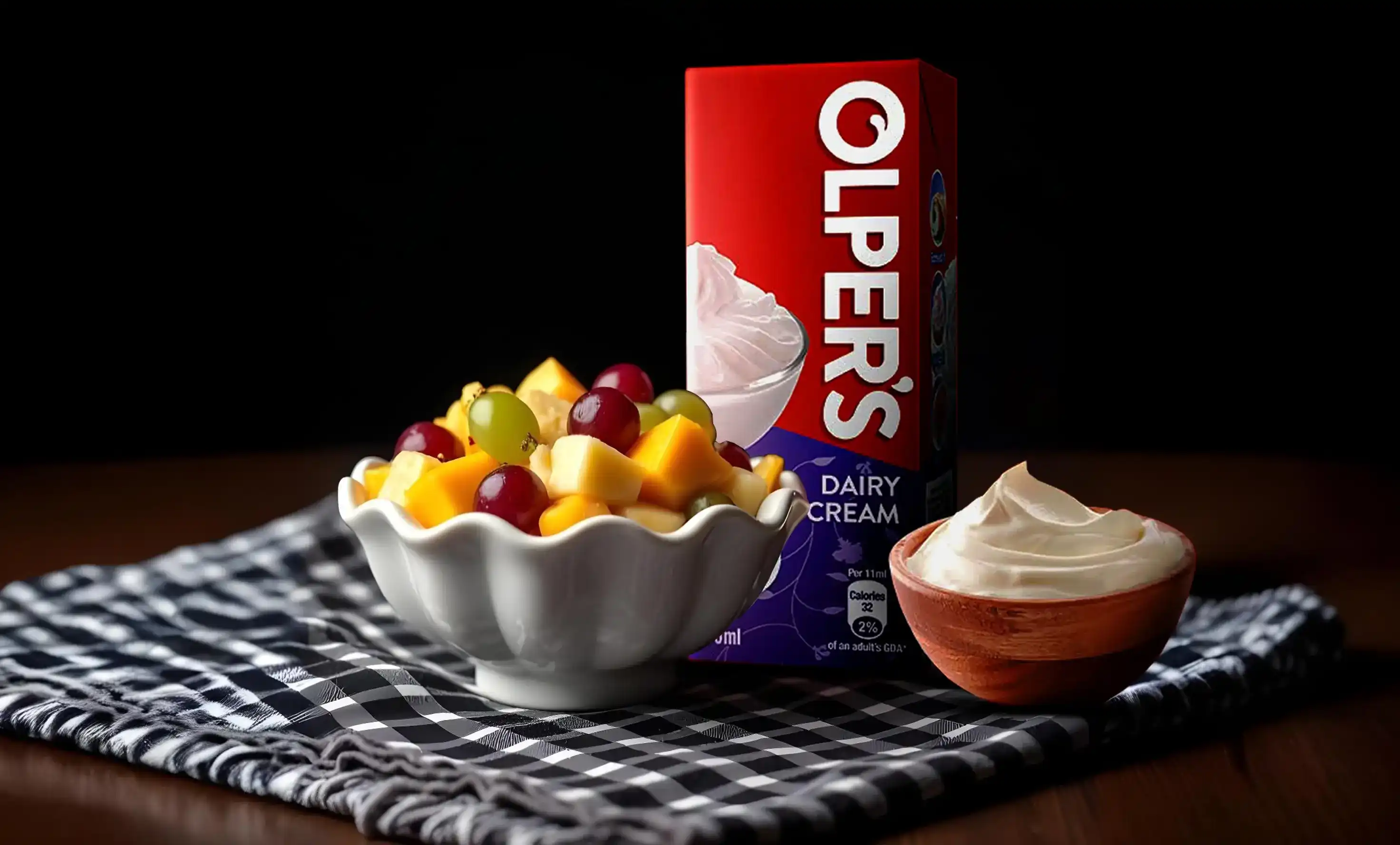
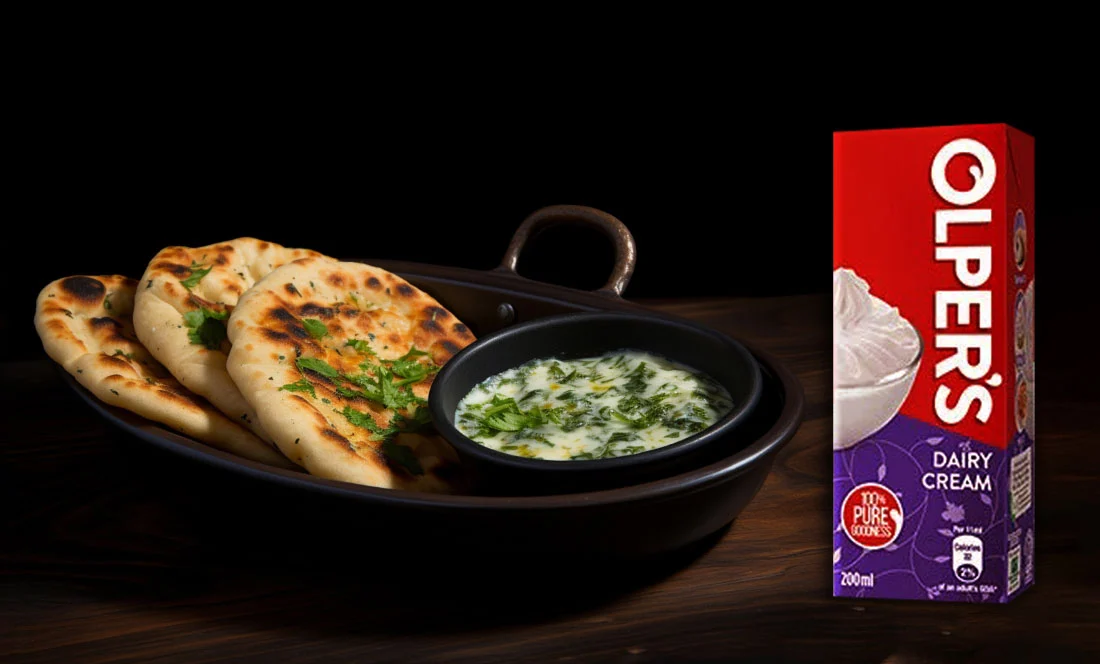
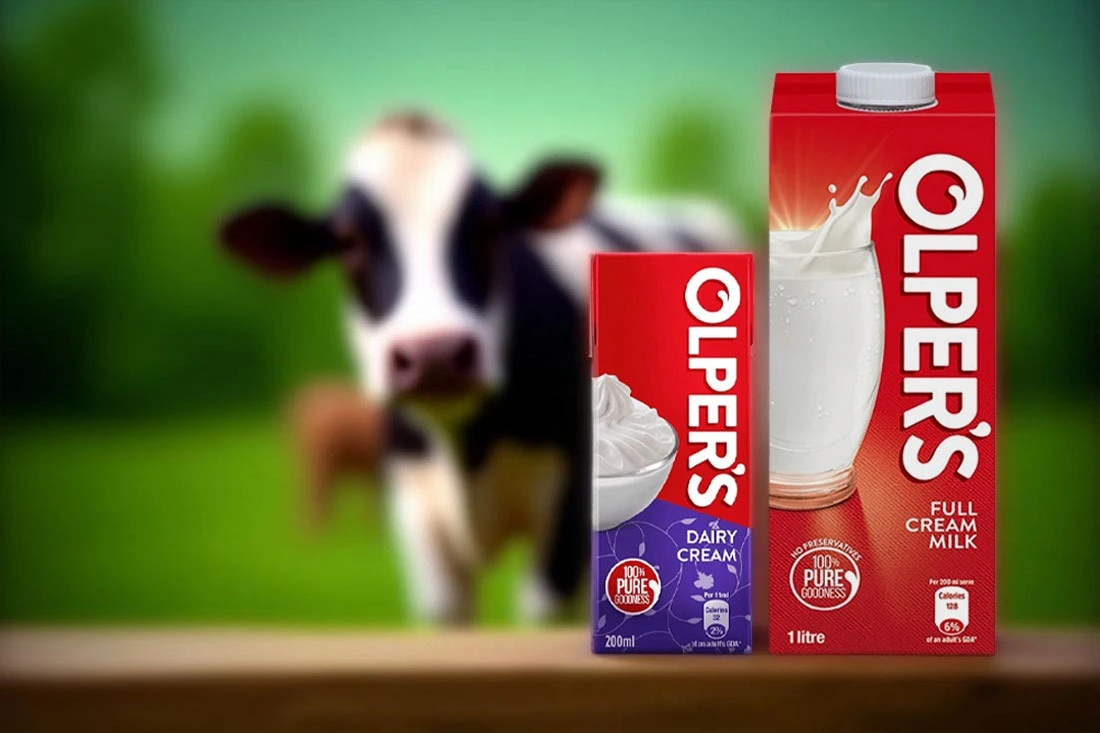
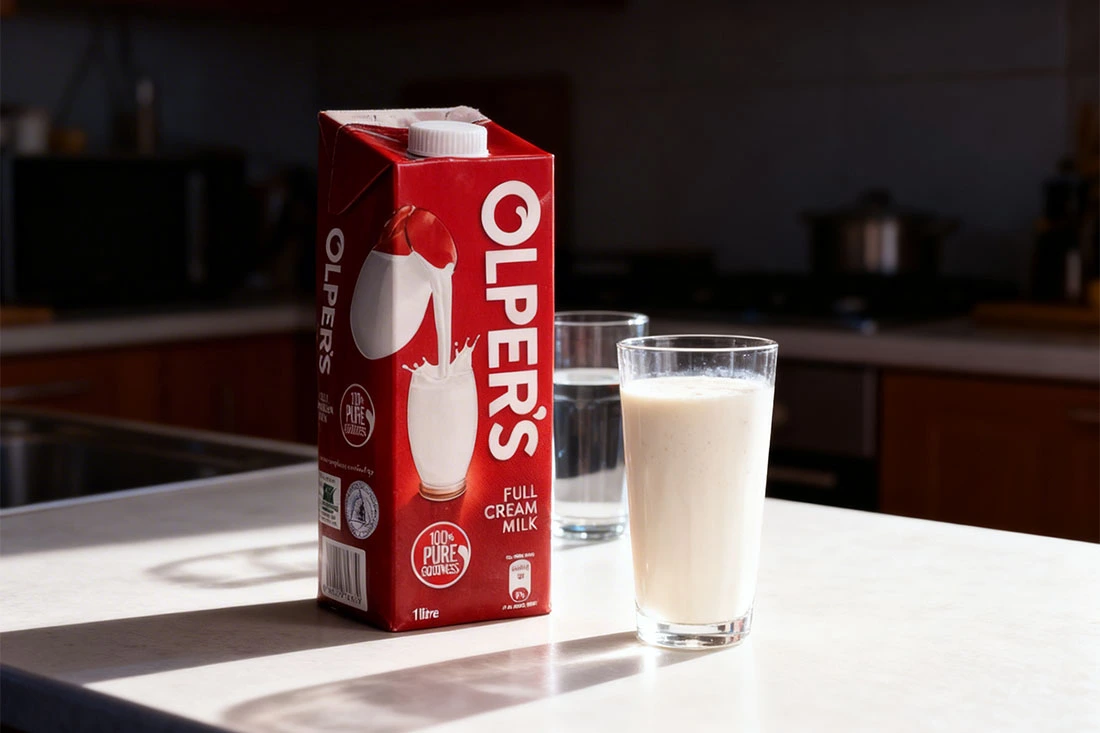
Olpers, one of Pakistan's most recognized dairy brands, produces packaged cream that falls squarely into the "dairy cream" category. Because it's UHT-processed and packaged under controlled conditions, Olpers cream offers a level of consistency that home-separated milk cream can't match. This matters more than people realize a curry recipe or a whipped dessert can turn out completely differently depending on whether your cream has 20% fat or 35% fat.
For home cooks and small food businesses in Pakistan, packaged cream from an established brand solves a few practical problems:
- Consistently every pack delivers roughly the same fat content and texture, so recipes are repeatable.
- Shelf stability UHT packaging means you don't need to use it the same day, unlike fresh malai.
- Food safety pasteurization reduces the risk of contamination compared to unprocessed cream sitting out.
- Convenience: no need to boil milk and wait for cream to rise; it's ready to use straight from the pack.
This makes packaged dairy cream, including Olpers cream, a practical staple for both everyday cooking and more demanding recipes like whipped cream frosting, alfredo sauces, or creamy curries.
Types of Cream You'll Commonly Encounter
Understanding cream isn't just about dairy cream versus milk cream there are several sub-types worth knowing, since recipes often call for a specific one:
- Fresh cream Light cream, usually around 18–25% fat, ideal for adding richness to soups, sauces, and curries without overwhelming the dish.
- Cooking cream Formulated to withstand heat without curdling, making it suitable for simmered dishes, pasta sauces, and gravies.
- Whipping cream contains enough fat (typically 30–36%) to trap air and hold its shape when whipped, perfect for toppings and fillings.
- Heavy cream The richest variety, often above 36% fat, used in custards, ganache, and dishes that need maximum creaminess and stability.
Choosing the right type matters. Using a light cooking cream where a recipe calls for heavy whipping cream will leave you with a thin, runny topping instead of stiff peaks. Conversely, using heavy cream in a light soup can make it overly rich and heavy.
How to Choose the Right Cream for Your Recipe
A simple rule of thumb: match the fat content to the job.
- For coffee or tea: light cream or milk cream works well, adding richness without heaviness.
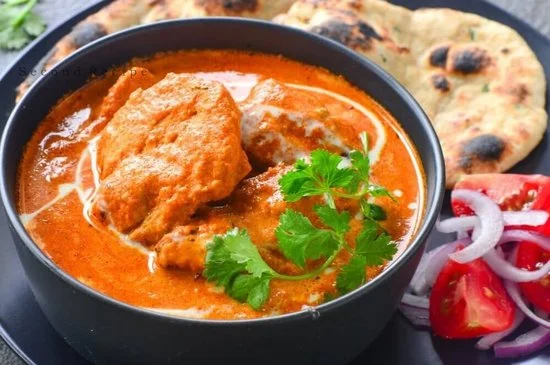
- For curries and gravies: cooking cream is designed to hold up to heat without splitting.
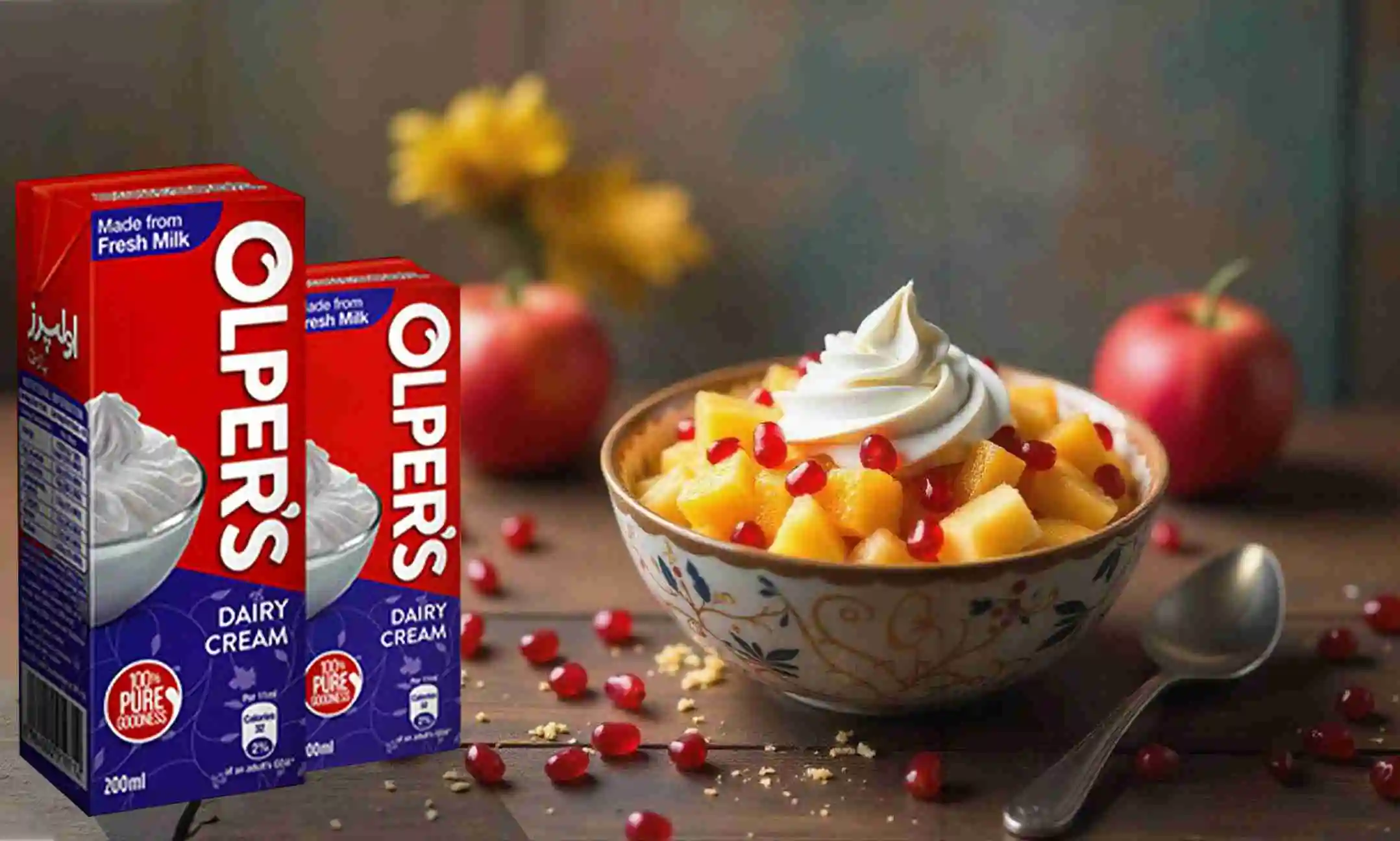
- For desserts and toppings: whipping cream or heavy cream gives you the structure needed for frosting, piping, or garnishing.
- For baking: heavy cream is often preferred for its stability and rich mouthfeel in cakes, ganache, and custards.
If you're substituting homemade malai for packaged cream (or vice versa), keep in mind the fat content difference. You may need to adjust quantities slightly to get the same richness and texture in your final dish.
The Bottom Line
Dairy cream and milk cream both originate from the fat content of milk, but they differ in how they're processed, standardized, and used. Milk cream, or malai, is the traditional, home-separated version common in South Asian kitchens, while dairy cream like Olpers cream is a commercially processed, standardized product designed for consistency, safety, and versatility across a wide range of recipes.
Whether you're making a quick cup of chai, a rich curry, or a batch of whipped dessert topping, understanding these differences helps you pick the right product for the job and get more predictable, delicious results every time.
Frequently Asked Questions
1. Is dairy cream the same as milk cream?
Not exactly. Both come from milk fat, but dairy cream is commercially processed and standardized, while milk cream (malai) is the naturally forming layer on boiled or settled milk with variable fat content.
2. What is the fat content of Olpers cream?
Packaged dairy creams like Olpers are formulated to a standardized fat percentage suited for general cooking and whipping use, offering more consistency than homemade cream. Check the pack label for the exact figure, as formulations can vary by product line.
3. Can I use milk cream instead of packaged dairy cream in recipes?
Yes, but results may vary since homemade milk cream has inconsistent fat content. You may need to adjust quantities to match the richness a recipe expects from standardized dairy cream.
4. What's the difference between fresh cream and whipping cream?
Fresh cream has a lower fat content and is meant for adding richness to dishes, while whipping cream has enough fat to trap air and hold shape when beaten, making it suitable for toppings and fillings.
5. Why does cooking cream not curdle when heated, unlike fresh cream?
Cooking cream is specially formulated with stabilizers and a fat structure that holds up under heat, whereas lighter fresh creams can separate or curdle when exposed to high temperatures or acidic ingredients.
6. Is heavy cream and whipping cream the same thing?
They're similar but not identical. Heavy cream generally has a higher fat content than whipping cream, giving it more stability and richness, which is why it's often preferred for custards and ganache.
7. How long does packaged dairy cream like Olpers last compared to homemade malai?
UHT-packaged dairy cream typically has a shelf life of several weeks to months when unopened, while homemade milk cream should ideally be used the same day it's collected.
8. Can dairy cream be used to make butter at home?
Yes, churning dairy cream whether packaged or homemade separates the fat into butter and leaves behind buttermilk. Higher-fat creams generally yield butter more efficiently.
9. What type of cream is best for Pakistani curries?
Cooking cream is usually the best choice for curries and gravies, since it's designed to blend smoothly and resist curdling during simmering, unlike lighter fresh creams.
10. Does the type of cream affect the taste of a dish, not just the texture?
Yes. Higher-fat creams add more richness and a fuller mouthfeel, while lighter creams add subtle creaminess without overpowering other flavors so the right choice depends on the dish you're preparing.